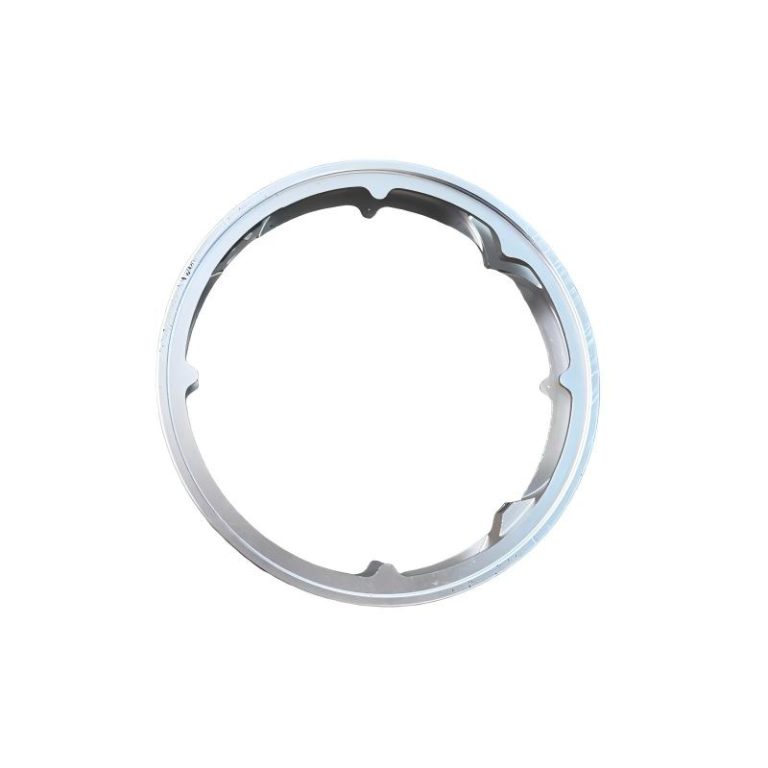
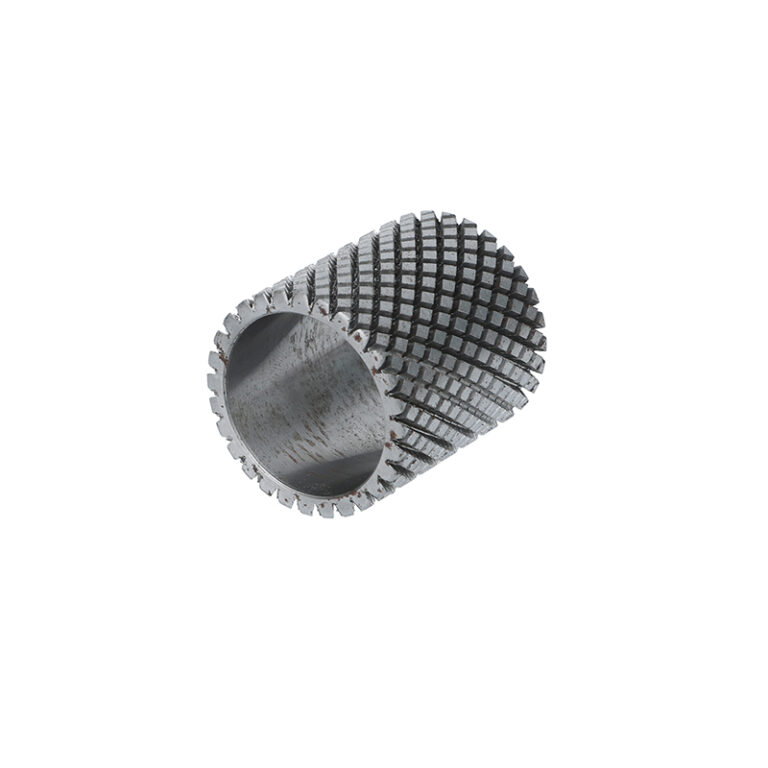
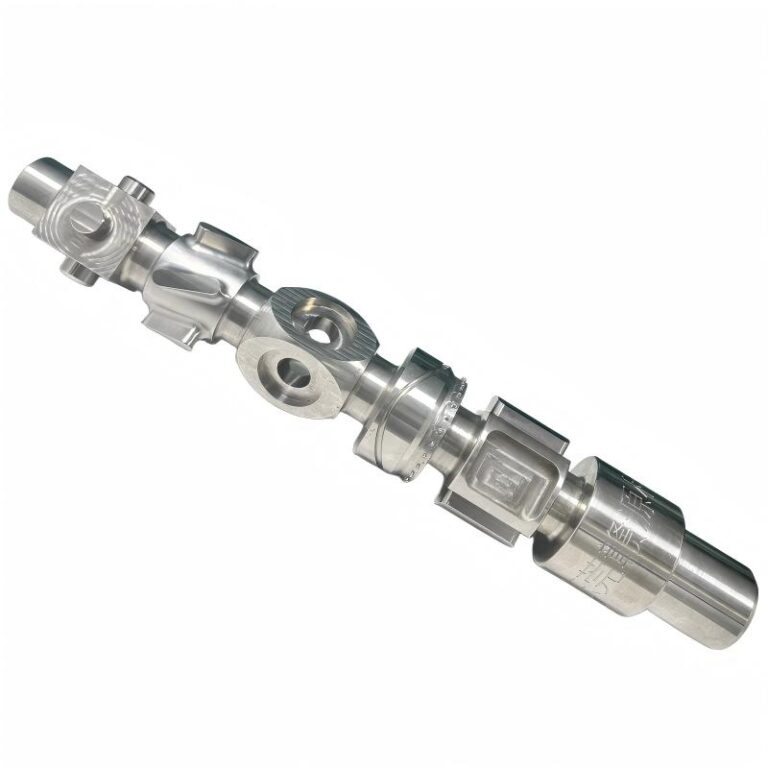
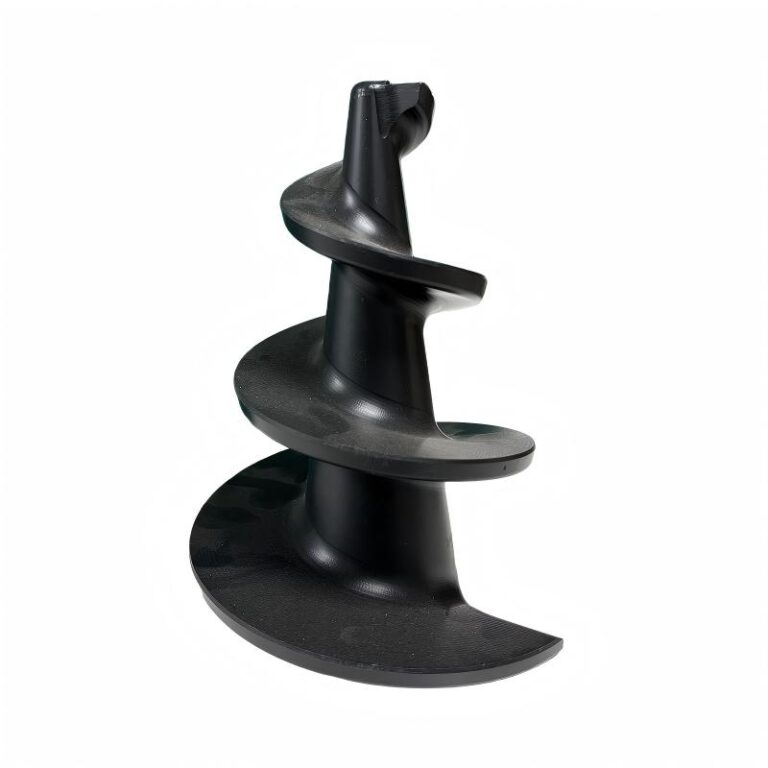
Precision stainless steel parts Trustworthy CNC machining and customization
Core Advantages and Technical Characteristics of CNC Machining of Stainless Steel Precision Parts
I. The Ultimate Pursuit of Geometric Accuracy and Dimensional Stability
1. The most significant advantage of CNC machining of stainless steel precision parts lies in its exceptional geometric accuracy and long-term dimensional stability.
Using high-precision CNC machining centers, the dimensional tolerances of parts can be stably controlled within the IT5-IT7 grade (±0.005-0.015mm), with a positional accuracy of ±0.01mm and a surface roughness of Ra0.2-0.8μm.
2. The integrated machining capability for complex surfaces is particularly outstanding.
Through five-axis linkage technology, precision machining of complex curved surfaces can be completed in a single setup, with a surface contour error ≤0.02mm.
3. High consistency in mass production provides reliable assurance for high-end equipment manufacturing.
In the mass production of valve cores for aerospace hydraulic systems, the critical dimension dispersion of 10,000 products does not exceed 0.005mm, and the CPK value remains consistently above 1.67. This high consistency ensures highly consistent dynamic response characteristics of the hydraulic system, significantly improving product reliability.
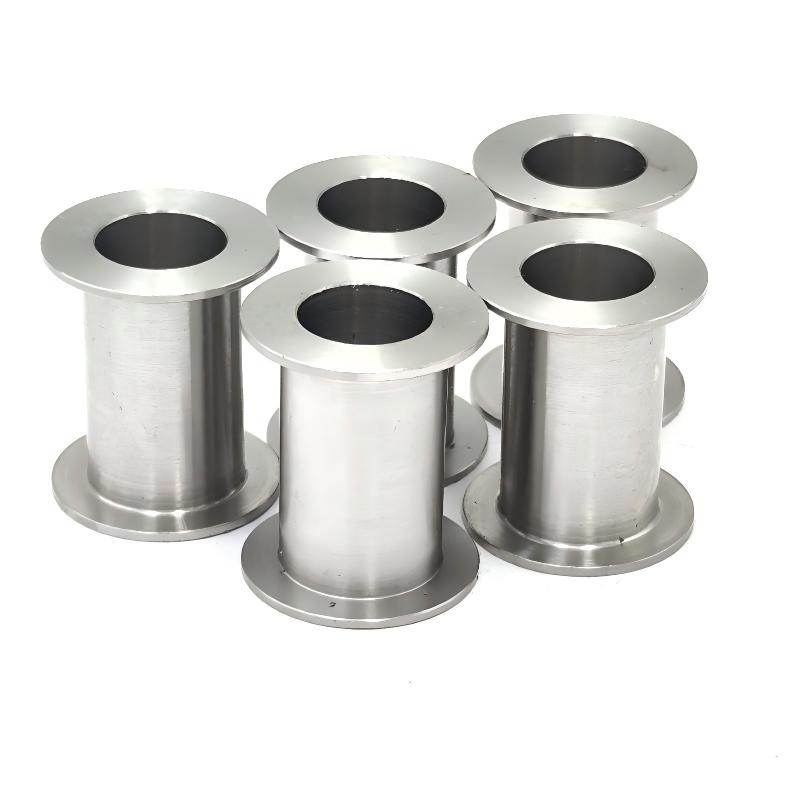
Precision stainless steel parts Trustworthy CNC machining and customization
II. Integrated Machining of Complex Structures and Functional Features
1. CNC machining technology has transformed stainless steel precision parts from simple geometric shapes into multifunctional integrated components.
Precision valve bodies with micro-channels have their complex internal channels machined in a single operation, with channel diameters of 0.5-3mm, corner radius R0.3mm, and inner wall roughness Ra0.4μm. Stainless steel gas distribution discs for semiconductor equipment utilize this precision channel to achieve accurate proportioning and delivery of various special gases, improving process stability.
2. Precision machining of micro-features showcases technological prowess.
Using micro-milling cutters (0.1-0.5mm in diameter) and high-speed spindles (30,000-50,000 rpm), micro-grooves with a width of 0.15mm and deep holes with a diameter of 0.2mm can be machined in stainless steel, achieving a depth-to-diameter ratio of 10:1. The machining precision of the micro-grooves in stainless steel filter support frames directly determines filtration accuracy and flow capacity.
3. Precise realization of sealing structures.
Multiple sealing grooves and labyrinth seal structures are machined on fittings, with groove width accuracy ±0.01mm, groove depth accuracy ±0.01mm, and groove bottom roughness Ra0.4μm. Stainless steel valve seats for high-pressure valves achieve zero leakage under 50MPa pressure using this precision sealing structure.
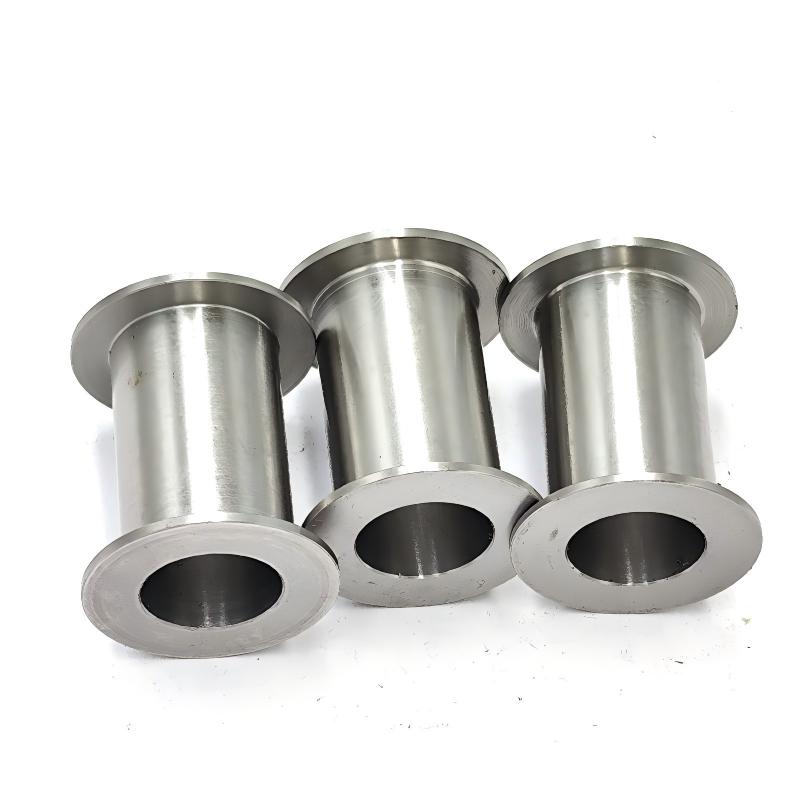
III. Full Utilization of Material Properties
1. Austenitic stainless steels such as 316L and 304 exhibit excellent performance in precision manufacturing.
By optimizing cutting parameters, precision dimensions are achieved while maintaining material corrosion resistance, uniform chromium and nickel distribution, and an intact passivation film. Stainless steel fittings for marine equipment show a 30% improvement in pitting corrosion resistance and extended service life after precision machining.
2. The hardness characteristics of martensitic stainless steels such as 420 and 440C are fully utilized.
After heat treatment to HRC48-55, hard-state turning technology is used for finishing, achieving a surface roughness Ra0.4μm and avoiding grinding burns. Stainless steel rings for precision bearings benefit from this process, which doubles fatigue life.
3. The strength advantages of precipitation-hardening stainless steels such as 17-4PH and 15-5PH are fully utilized.
High strength is achieved through aging treatment while precision machining, resulting in tensile strengths exceeding 1300 MPa. High-strength stainless steel structural components for aerospace applications have a strength-to-weight ratio comparable to titanium alloys, with a more cost-effective advantage.
IV. Synergistic Optimization of Heat Treatment and Machining
1. Perfect coordination between tempering and finishing.
After rough machining, a 0.2-0.3mm allowance is left for finishing. Precision machining is then performed after heat treatment, eliminating the effects of heat treatment deformation and ensuring final dimensional accuracy. For stainless steel used in precision molds, deformation after heat treatment is controlled within 0.02mm, and finish machining restores the precision to IT6 level.
V. Surface Integrity and Functional Coatings
1. High-quality substrate for polishing.
The surface roughness Ra0.4μm obtained through precision machining provides an ideal foundation for polishing. After polishing, the surface roughness can reach Ra0.05μm, achieving a mirror-like gloss effect.
2. Precise control of passivation treatment.
After precision machining to achieve a clean surface, passivation treatment is applied, resulting in a uniform passivation film thickness and a neutral salt spray resistance of over 1000 hours. This stainless steel fitting is designed for outdoor equipment, ensuring long-term weather resistance and corrosion resistance.
Company Profile
We are a manufacturer integrating industry and trade. We have more than 20 years of experience in production technology. We are located in Dongguan City, Guangdong Province, China. We have advanced high-end professional production and processing technology, and are committed to innovative R&D and production. After years of market tempering and exploration, it has high-quality technical management personnel, experienced designers, R&D personnel and a perfect company management system cnc precision.
5-axis CNC workshop
Our factory has a plant area of about 2,000 square meters and masters core processing technologies. It has high-end precision production equipment cnc precision: CNC lathes, 5-axis CNC, 4-axis CNC, stamping equipment, die-casting equipment, etc. 2.5-dimensional detection equipment 
two-dimensional testing

cnc precision surface treatment
For surface treatment, our suppliers have been working with us for many years. They have rich experience and are familiar with all the quality requirements of each other. The quality is stable and more guaranteed. Such as: heat treatment, spray painting, powder coating, blackening, silver/gold plating, electrolytic polishing, nitriding, phosphating, nickel/zinc/chromium/TiCN plating, anodizing, polishing, passivation, sandblasting, galvanizing, heat treatment , hardening, laser marking, etc. according to customer requirements. Aluminum alloy surface oxidation
Product Packaging
Packaging Details
- Commercial packaging: 1pc/plastic bag + color box +carton + pallet;
- Industrial packaging: (1). plastic tube + carton + pallet; (2). plastic bag + kraft paper + carton + pallet;
- According to the requirement of customer.

FAQ
Q1: Where can I get product & price information?
A1: Send us an inquiry e-mail, we will contact you once we received your mail.
Q2: How long will I get the sample?
A2: Depends on your specific items, within 3-7 days generally.
Q3: What kinds of information do you need for a quote?
A3: Kindly please provide the product drawings in PDF, if provide in STEP or IGS will be better.
Q4: What are the payment terms?
A4: We accept 50% as a payment deposit, when the goods are prepared, we shoot photos or videos for your check, and then you can pay the balance. For small quantities, we accept Paypal, the commission will be added to the order. For big amounts, T/T is preferred.
Q5: How to deliver the goods?
A5: We deliver the products by courier company.
Q6: Are you a trading company or factory?
A6: We are factory direct with 17 experienced engineers and more than 50 employees as well approximate 3,000m2 workshop area.
Q7: What shall we do if we don't have drawings?
A7: Please send your sample to our factory, then we can copy and provide you better solutions. If send us pictures or drafts with dimensions(Length, Height, Width), CAD or 3D file will be made for you.
Q8: Can we get some samples before mass production?
A8: Absolutely yes.
Q9: Will my drawings be safe after sending them to you?
Q10: Is it possible to know the operation status of my products without visiting your company?
A10: We will offer a detailed production schedule and send weekly reports with digital pictures and videos which show the machining progress.