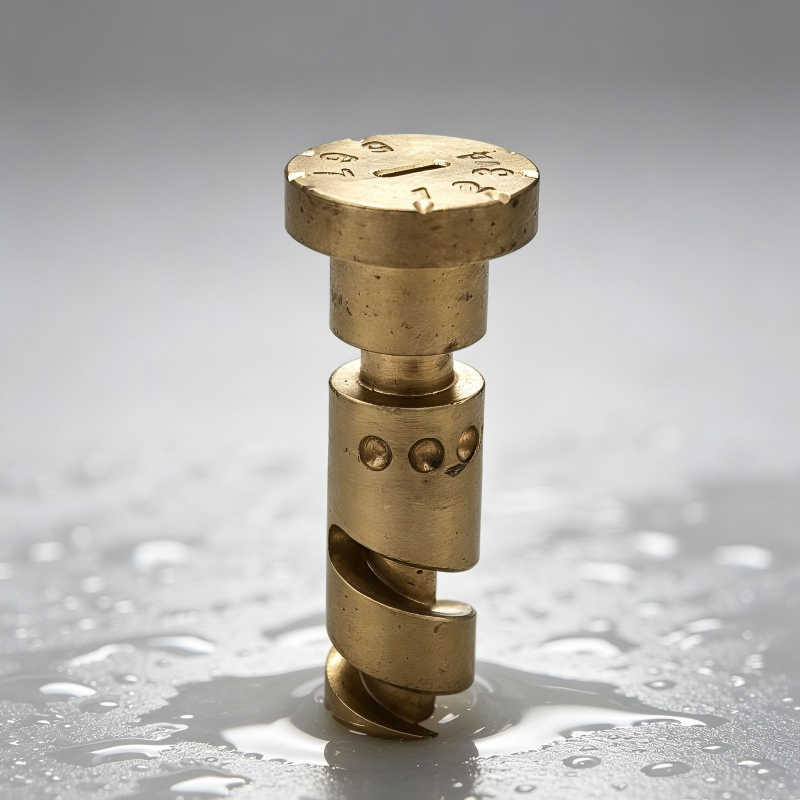
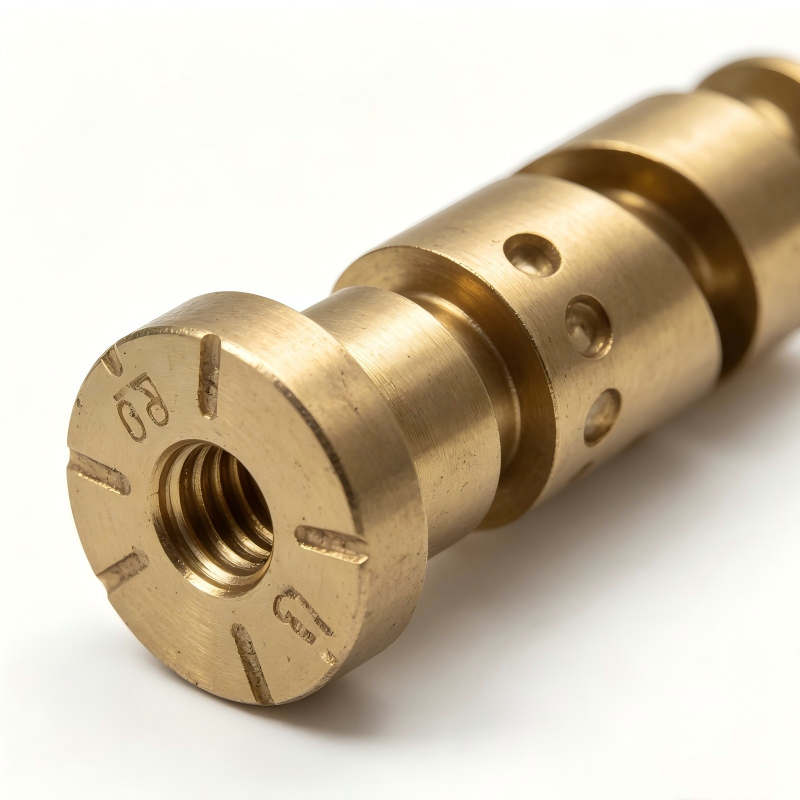
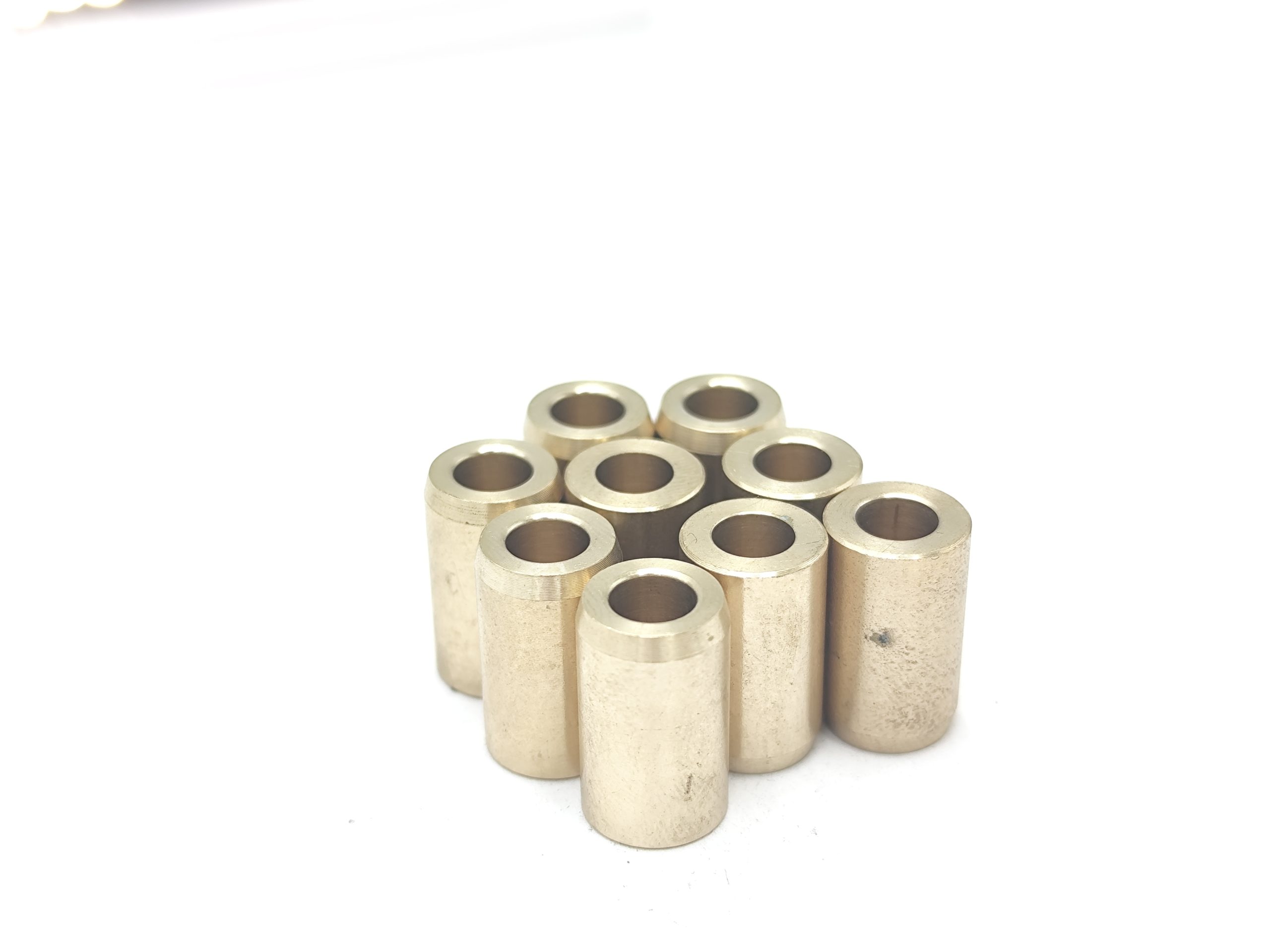
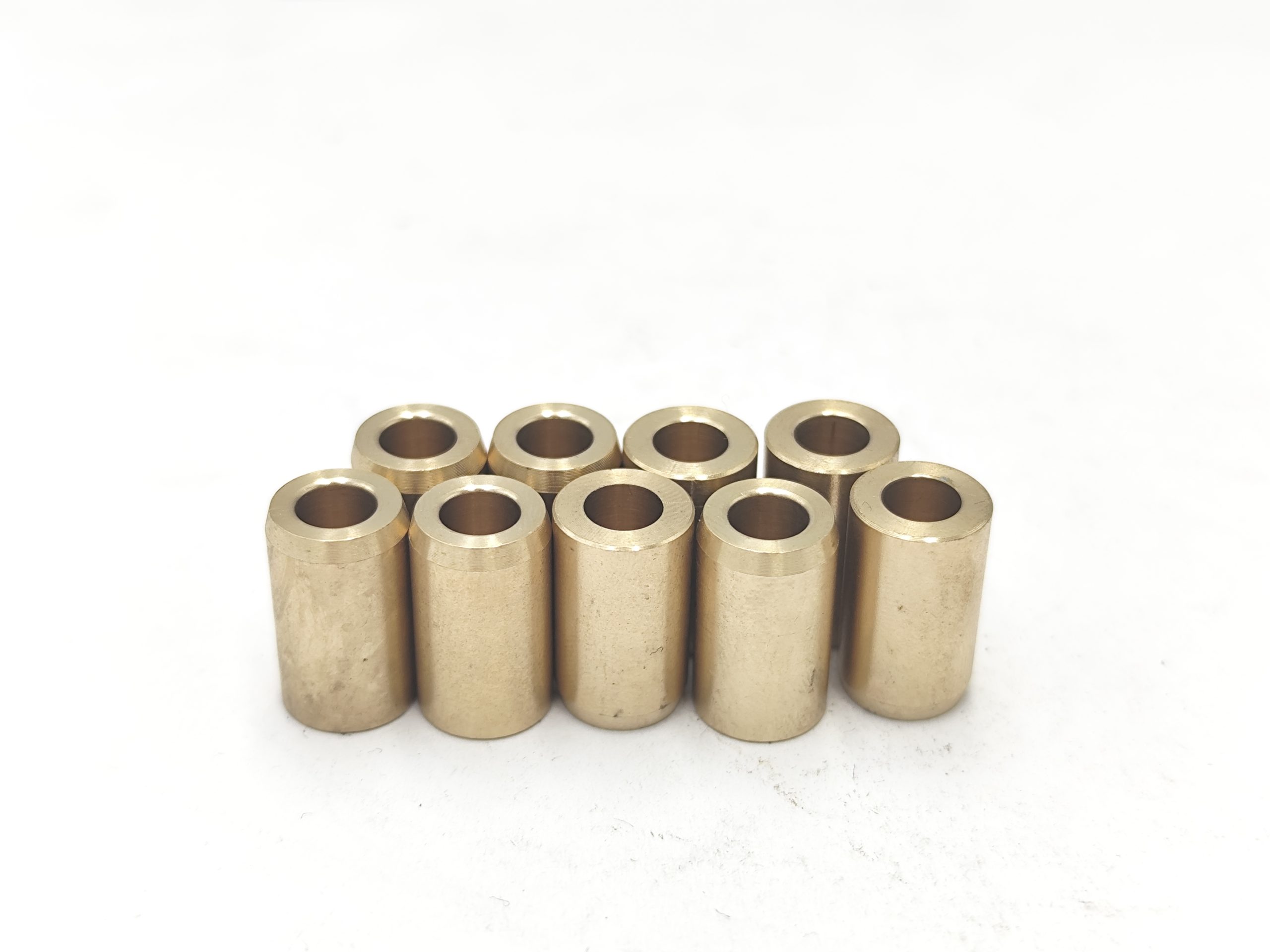
Precision-crafted brass fasteners: high precision, strong toughness, durable and stable.
Brass, a typical representative of copper-zinc alloys, is a preferred material in fastener manufacturing due to its excellent machinability, corrosion resistance, electrical conductivity, and aesthetic appeal. CNC machining technology, with its core advantages of high precision, high consistency, and high efficiency, perfectly matches the stringent requirements of brass fasteners for dimensional accuracy, surface quality, and mass production. It deeply integrates the material properties of brass with the technological advantages of CNC machining, making it widely used in various industrial fields such as electronics, automotive, aerospace, and construction, becoming an indispensable key component in modern manufacturing.
I. Core Advantages of CNC Machining of Brass Fasteners
The compatibility between brass and CNC machining stems from the synergistic effect of brass's inherent material properties and the CNC machining process. Compared to traditional manual machining or other metal processing methods, CNC machining of brass fasteners has significant advantages.
Brass itself has excellent machinability, especially C360 free-machining brass. Compared to materials such as stainless steel and titanium alloys, the machining cycle can be shortened, effectively reducing production costs. Meanwhile, brass has a low coefficient of thermal expansion, meaning that temperature changes have a negligible impact on part dimensions during CNC machining. Combined with the precise control of the CNC system, tolerances can be stably controlled within ±0.01 mm, and surface roughness can be as low as Ra 0.6 micrometers, meeting the needs of most applications without the need for additional polishing.
CNC machining utilizes programmable control, generating optimized G-code through CAD/CAM software to drive cutting tools to complete a series of operations such as turning, milling, drilling, and tapping. This enables automated continuous production, avoiding errors from manual operation and flexibly adapting to different needs from single-piece prototypes to mass production of tens of thousands of pieces, balancing flexibility and scalability. Furthermore, CNC machining can precisely machine complex structures.
Precision-crafted brass fasteners: high precision, strong toughness, durable and stable.
II. Main Application Areas of CNC-Machine-Machined Brass Fasteners
Leveraging the comprehensive performance of brass and the precision advantages of CNC machining, brass fasteners are used across multiple industries, demonstrating irreplaceable value, especially in fields with special requirements for precision, corrosion resistance, and conductivity.
(I) Electronics and Electrical Industry: Core Conductive Connecting Components
The electronics and electrical industry is one of the main application areas for CNC-machined brass fasteners. The core requirements focus on conductivity, dimensional accuracy, and contact reliability. Brass possesses excellent electrical and thermal conductivity, and combined with the high precision of CNC machining, it can be used to manufacture various precision conductive fasteners.
In precision instruments and communication equipment, CNC-machined brass fasteners can achieve micron-level dimensional control, ensuring a tight fit at the connection points and preventing circuit failures caused by poor contact. Oxidation resistance is also crucial; these surface treatment processes require the high precision of CNC machining to ensure uniform coating and strong adhesion.
(II) Automotive Industry: Matching Lightweight and Weather Resistance Requirements
As the automotive industry moves towards lightweighting and energy efficiency, brass fasteners, with their moderate density and balanced strength, have become an ideal choice for automotive parts. CNC machining ensures that they meet the stringent standards of automotive manufacturing. In core components of automobiles such as engines, transmissions, and chassis, CNC-machined brass bolts, nuts, bushings, and other fasteners can withstand certain mechanical loads while possessing good oil and temperature resistance, adapting to the complex operating conditions within the engine compartment. In automotive electrical systems, brass fasteners are used to connect wiring harnesses, sensors, and other components, ensuring the stability of circuit conduction. Their excellent thermal conductivity quickly dissipates heat generated by electrical contacts, preventing component overheating and damage.
Furthermore, decorative fasteners in automotive interiors, such as brass screws and clips, are CNC-machined to achieve precise dimensional control and a smooth surface texture. Combined with surface treatments such as polishing and brushing, they meet both decorative requirements and provide sufficient connection strength. In new energy vehicles, brass fasteners are also used to connect components such as battery packs and charging piles, utilizing their good conductivity and corrosion resistance to ensure the safe operation of new energy vehicles.
(III) Aerospace Industry: High Precision and High Reliability Support
The aerospace field demands extremely high precision, reliability, and environmental resistance from its components. CNC-machined brass fasteners, with their precise dimensional control and stable performance, hold a crucial position in this field. Because aerospace equipment components operate in extreme environments such as high altitudes, low temperatures, and high pressures, brass fasteners must possess excellent corrosion resistance and dimensional stability. CNC machining can control tolerances within ±0.005 mm, ensuring precise fit between components and preventing equipment failures due to dimensional deviations.
FAQ
Q1: Where can I get product & price information?
A1: Send us an inquiry e-mail, we will contact you once we received your mail.
Q2: How long will I get the sample?
A2: Depends on your specific items, within 3-7 days generally.
Q3: What kinds of information do you need for a quote?
A3: Kindly please provide the product drawings in PDF, if provide in STEP or IGS will be better.
Q4: What are the payment terms?
A4: We accept 50% as a payment deposit, when the goods are prepared, we shoot photos or videos for your check, and then you can pay the balance. For small quantities, we accept Paypal, the commission will be added to the order. For big amounts, T/T is preferred.
Q5: How to deliver the goods?
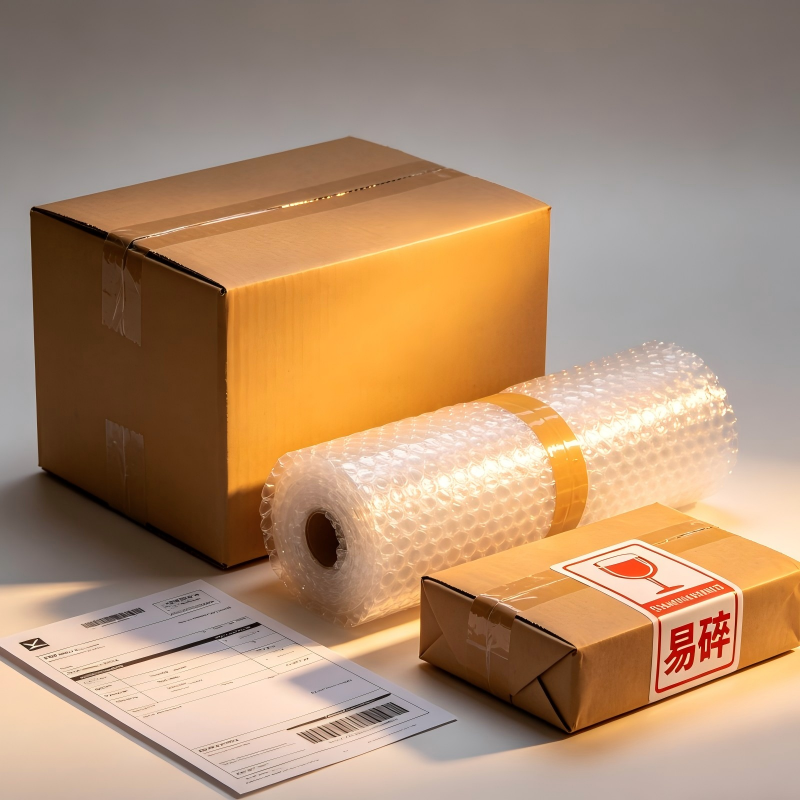
A5: We deliver the products by courier company.
Q6: Are you a trading company or factory?
A6: We are factory direct with 17 experienced engineers and more than 50 employees as well approximate 3,000m2 workshop area.
Q7: What shall we do if we don't have drawings?
A7: Please send your sample to our factory, then we can copy and provide you better solutions. If send us pictures or drafts with dimensions(Length, Height, Width), CAD or 3D file will be made for you.
Q8: Can we get some samples before mass production?
A8: Absolutely yes.
Q9: Will my drawings be safe after sending them to you?
Q10: Is it possible to know the operation status of my products without visiting your company?
A10: We will offer a detailed production schedule and send weekly reports with digital pictures and videos which show the machining progress.