
» Five-axis CNC machining » Trustworthy CNC machined stainless steel pipe fittings made of 304 food-grade material
Trustworthy CNC machined stainless steel pipe fittings made of 304 food-grade material
enquiry- Specifications
Trustworthy CNC machined stainless steel pipe fittings made of 304 food-grade material
CNC Machining of stainless steel pipe: The Art of Precision and Rigidity
CNC machining of stainless steel pipe is a precision manufacturing task that demands extremely high levels of material properties, process design, and machine tool performance. Unlike solid bars, thin-walled or medium-thickness pipes are highly susceptible to vibration and deformation during machining due to cutting and clamping forces. The core challenge lies in maintaining the inherent geometric accuracy and structural rigidity of the workpiece while removing material. The core process can be systematically summarized into three stages.
Stage 1: Systematic Process Planning and Preparation
Successful machining begins with a deep understanding and meticulous preparation of the part. The process engineer first analyzes the drawings, clarifying the pipe's wall thickness, length, diameter tolerances, and internal and external surface features such as stepped holes, grooves, and flanges. The clamping scheme is the core of this stage.
Specialized fixture mandrels, slotted bushings, or optimized three-jaw chuck clamping points must be designed to evenly distribute pressure and prevent the pipe wall from being flattened. For tool selection, considering the viscosity and work hardening tendency of stainless steel, sharp, coated carbide tools with optimized chip-breaking grooves must be chosen. CNC programming requires generating different toolpaths and parameters for subsequent roughing, semi-finishing, and finishing processes, with particular emphasis on cutting force control.
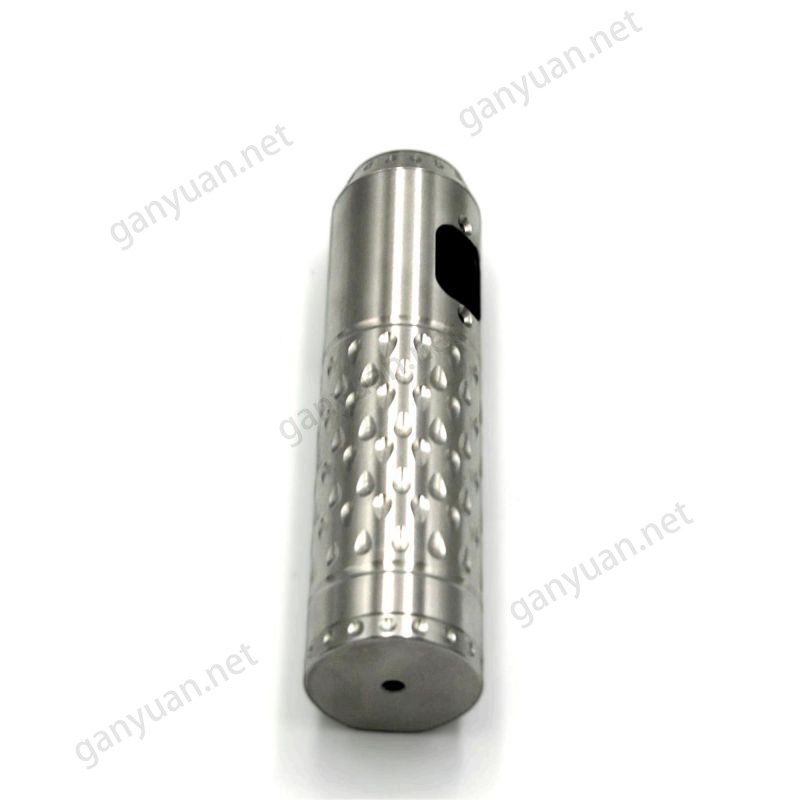
Trustworthy CNC machined stainless steel pipe fittings made of 304 food-grade material
Second Stage: Precision Forming Through Multi-Process Collaboration
The core step of transforming blueprints into solid objects is typically completed in a mill-turn center or a machining center.
Datum Establishment and External Diameter Machining: First, the end face and outer diameter of the steel pipe are turned to establish a precision datum. Then, the pipe is typically turned and clamped using this datum to complete the machining of the entire length of the outer diameter, steps, tapered surfaces, and other features, ensuring coaxiality.
Internal Cavity Machining and Thin-Wall Control:
This is the key and challenging aspect of stainless steel pipe machining. When using slender boring bars or internal turning tools for internal turning, a strategy of high speed, small depth of cut, and rapid feed must be employed, along with high-pressure internal cooling to reduce radial cutting forces and prevent tool deflection and vibration. For deep holes or high-precision internal holes, multiple processes—rough boring, semi-finish boring, and finish boring—are required to gradually release stress and improve accuracy.
Milling and Drilling: Utilizing the milling function of the machine tool, planes, keyways, and irregular contours are milled on the circumference or end face of the stainless steel pipe, or holes are drilled and tapped. For radial holes on the pipe wall, special attention must be paid to controlling the axial force during drilling to prevent deformation of the pipe wall.
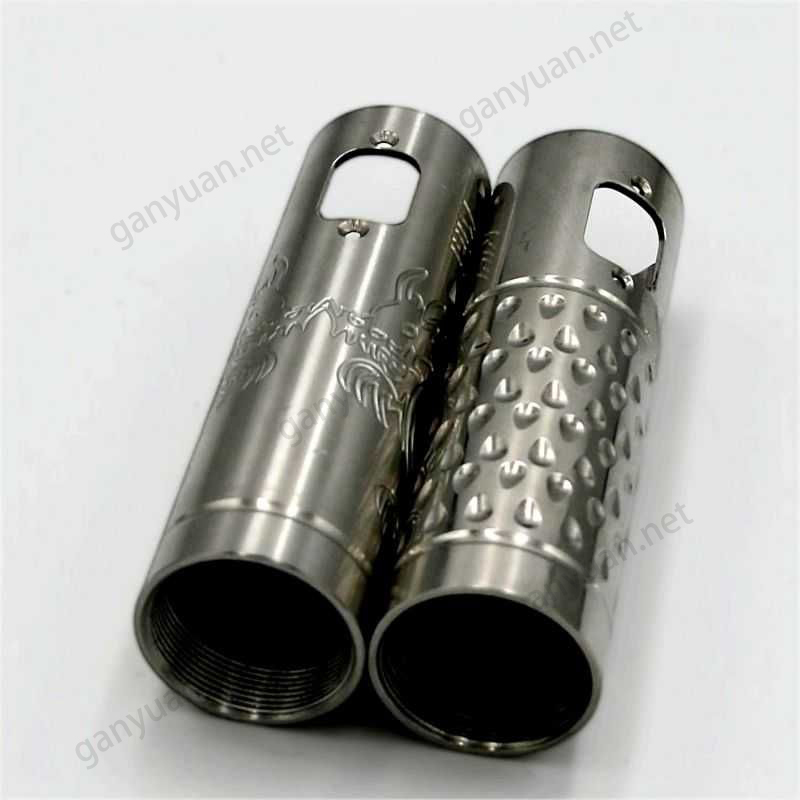
Third Stage: Stress Relief and Quality Closed-Loop
After machining, physical changes do not stop. For parts with extremely high precision requirements, low-temperature stress-relief annealing may be necessary to eliminate residual stress accumulated in the thin wall during machining and prevent future natural deformation. Subsequently, thorough deburring and cleaning are essential, especially of burrs at the edges of inner holes and intersecting holes.
Finally, using precision instruments such as a coordinate measuring machine (CMM), roundness tester, and dial indicator, the key dimensions, geometric tolerances (such as coaxiality, roundness, and cylindricity), and surface roughness of the steel pipe are comprehensively inspected to ensure complete compliance with design intent.
In summary, CNC machining of stainless steel pipe is a process that deeply integrates systematic planning, flexible CNC technology, and knowledge of materials mechanics. By precisely controlling the forces, heat, and deformation, it transforms an ordinary stainless steel pipe into a precision functional component that meets the needs of high-end equipment, perfectly embodying the precision manufacturing philosophy of "overcoming strength with flexibility" in modern metal processing.
Company Profile
We are a manufacturer integrating industry and trade. We have more than 20 years of experience in production technology. We are located in Dongguan City, Guangdong Province, China. We have advanced high-end professional production and processing technology, and are committed to innovative R&D and production. After years of market tempering and exploration, it has high-quality technical management personnel, experienced designers, R&D personnel and a perfect company management system.
5-axis CNC workshop
Our factory has a plant area of about 2,000 square meters and masters core processing technologies. It has high-end precision production equipment: CNC lathes, 5-axis CNC, 4-axis CNC, stamping equipment, die-casting equipment, etc.

Auxiliary production equipment: electroplating, anodizing, hard anodizing and surface treatment. We have complete testing equipment: sophisticated three-dimensional testing, two-dimensional testing, hardness tester, height meter, projector and other conventional testing equipment. If you are interested in our products, please contact me and I will provide the best price support and quality service.
2D inspection equipment
Product Packaging
Packaging Details
- Commercial packaging: 1pc/plastic bag + color box +carton + pallet;
- Industrial packaging: (1). plastic tube + carton + pallet; (2). plastic bag + kraft paper + carton + pallet;
- According to the requirement of customer.

Enquiry Form
Maybe you like also
©2022 | ganyuan.net
Service