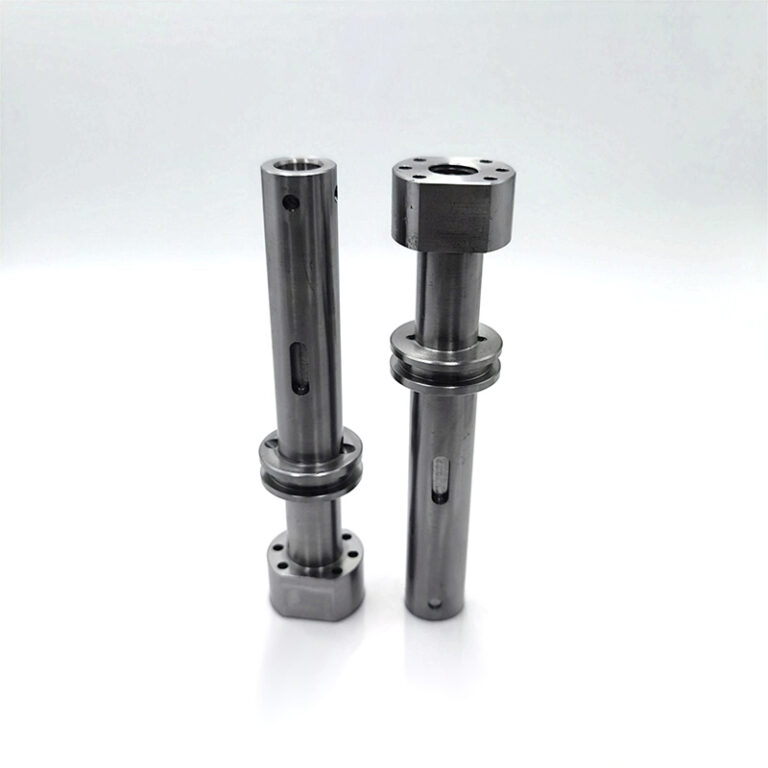
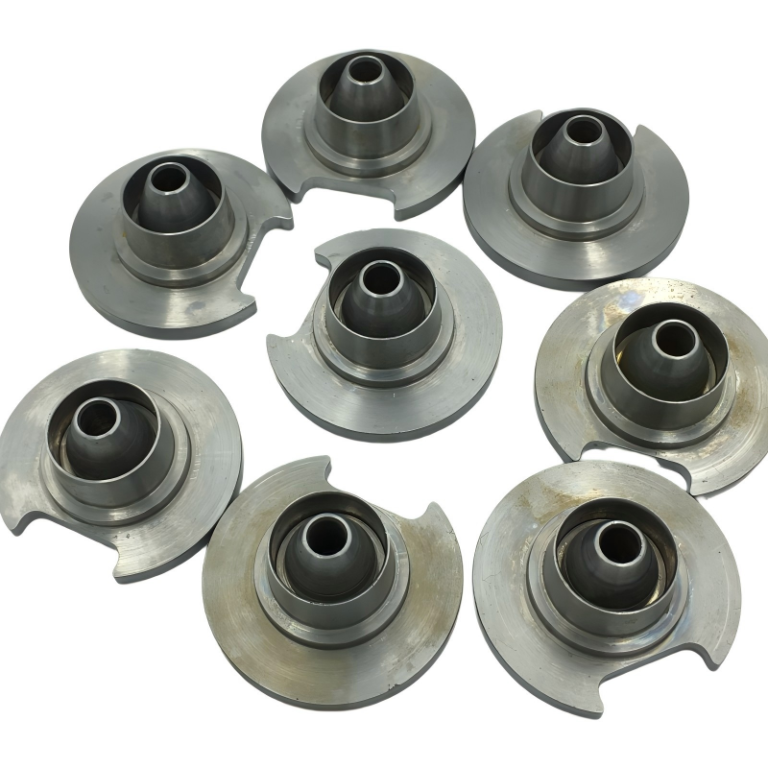
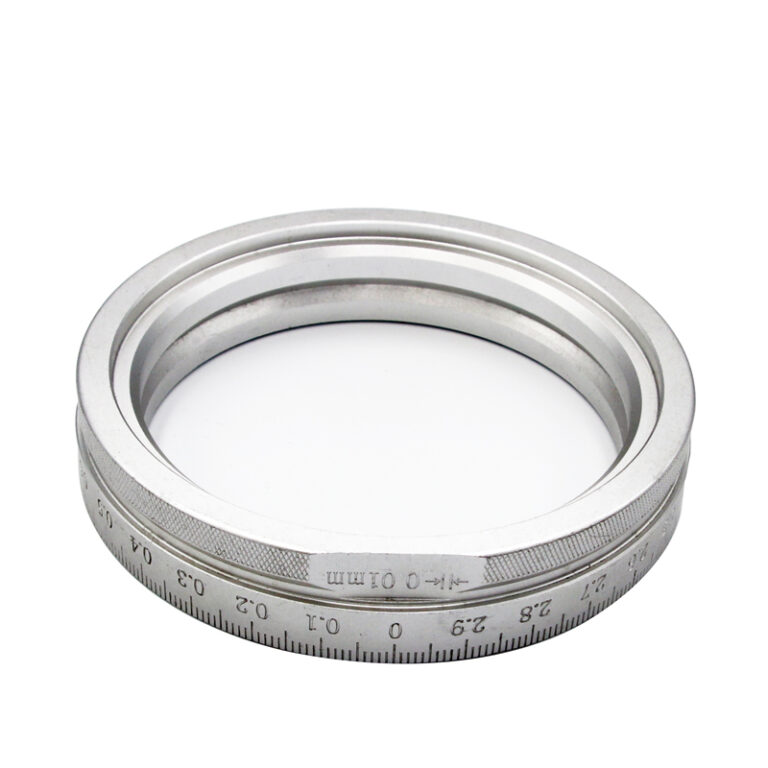
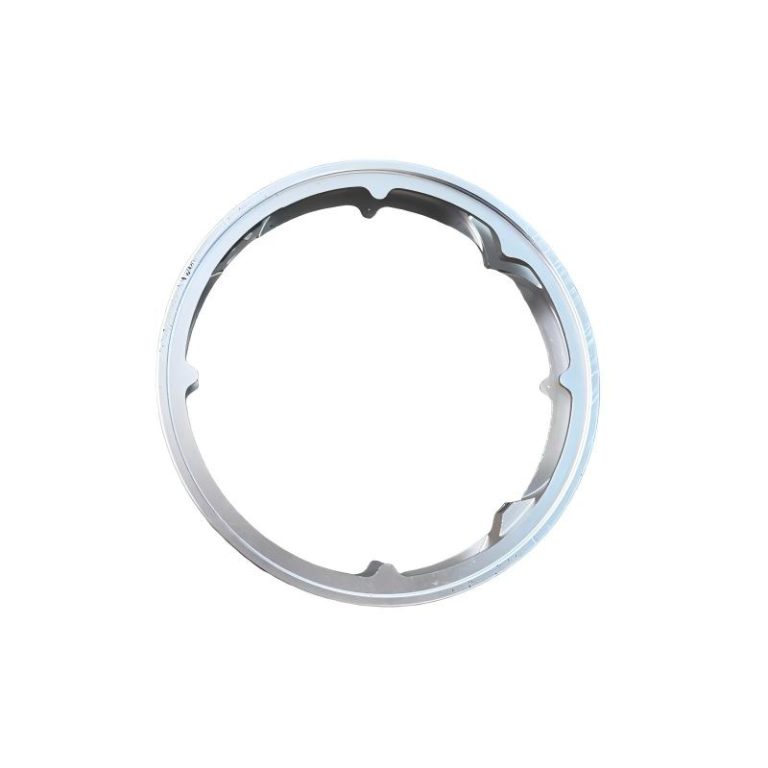
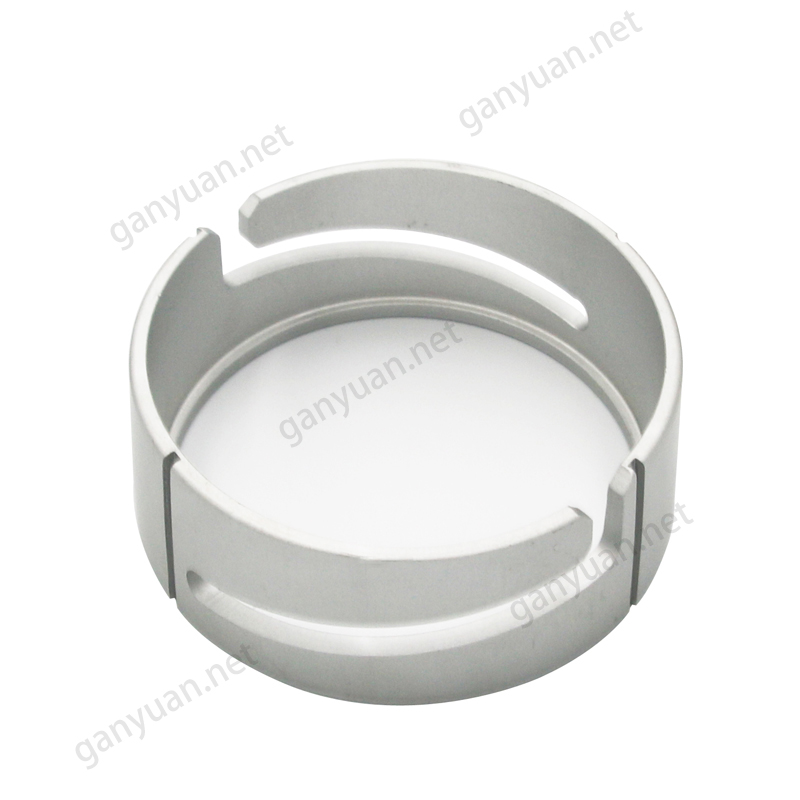
Custom-made non-standard aluminum ring reliable 5-axis CNC machining positioning bushings.
CNC machining of aluminum ring is a typical process for controlling the rigidity of thin-walled rotating parts in precision machinery. As a key positioning component in bearing housings, sealing cavities, or optical components, the core requirement for aluminum ring is to achieve extremely high dimensional accuracy, geometric accuracy (roundness, cylindricity, parallelism), and stable mechanical properties under the premise of thin walls and poor rigidity. The core challenge of machining is how to resist the "ellipticization" deformation caused by cutting forces and clamping forces during high-speed material removal, and to control dimensional drift caused by stress release.
How to design a process flow that focuses on suppressing aluminum ring deformation?
I. Layered Alternating Lightweight Cutting
This is the core step in achieving "overcoming rigidity with flexibility," usually completed on a mill-turning center or a high-precision CNC lathe.
1) First, in a single clamping operation, the end face and inner hole or outer circle of one end of the ring are precision turned to establish a unified measurement and positioning benchmark. 1) Roughing employs a strategy of "high speed, medium depth of cut, and fast feed" to quickly remove most of the excess material. However, it needs to be done in alternating layers in the axial and radial directions, like peeling an onion, to evenly distribute cutting stress and thermal load.
2) Semi-finishing and stress balancing: After roughing, an uneven residual stress field forms inside the workpiece. The purpose of semi-finishing is to correct deformation while creating a relatively balanced intermediate state for finishing. More conservative parameters are often used at this stage, and a "clamping and tightening" step may be arranged after critical processes to partially release stress.
3) Finishing and dimensional stability: This is the decisive stage for ensuring final accuracy. New tools are typically used, and final shaping is performed at extremely low cutting parameters (depth of cut as small as 0.05mm). For mating surfaces requiring extremely high precision, a "single pass, micro-finishing" process can be used, combined with sufficient cooling, to directly achieve a mirror finish. Finishing is often completed in two clamping operations to ensure the parallelism of the two end faces.
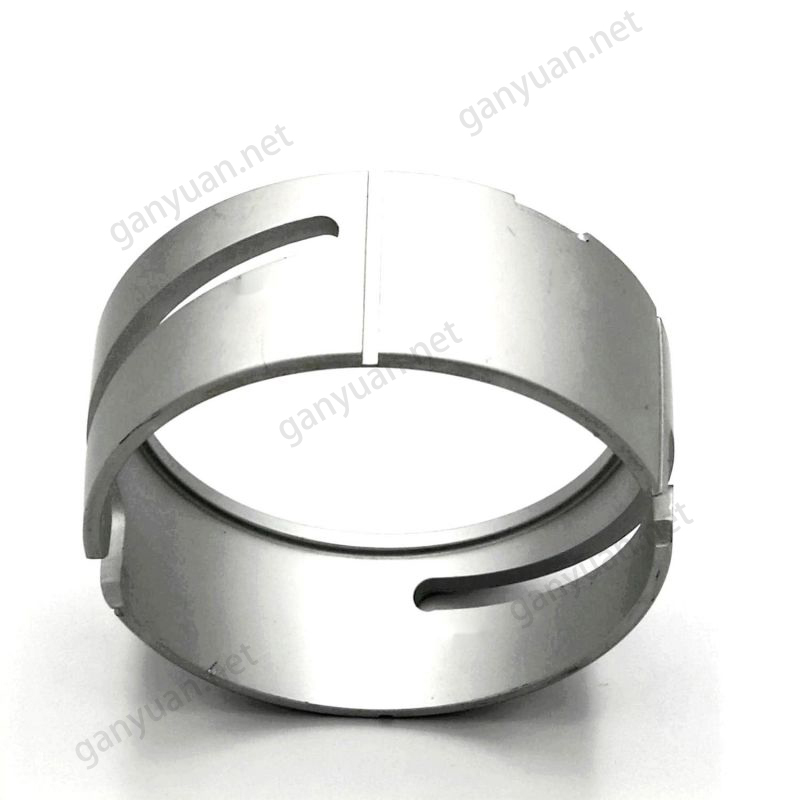
Custom-made non-standard aluminum ring reliable 5-axis CNC machining positioning bushings.
II. Aging Stabilization and Comprehensive Testing
Post-machining treatment is crucial for ensuring the long-term accuracy of aluminum ring after delivery.
1) Stress Relief Aging Treatment: After all finishing processes, a low-temperature artificial aging treatment must be performed to thoroughly and uniformly eliminate internal residual stress. This is a necessary step to prevent dimensional creep during storage or use.
2) Comprehensive Precision Testing: In a constant-temperature testing chamber, comprehensive testing is conducted using pneumatic measuring instruments, roundness testers, and coordinate measuring machines (CMMs). The focus is not only on the diameter but also on the roundness and cylindricity of the entire cross-section, as well as the parallelism of the two end faces and their perpendicularity to the reference axis. For high-performance aluminum ring, hardness testing is also performed to ensure the material condition meets design specifications.
3) Cleaning and Protection: Aluminum is soft and easily scratched. Finally, ultrasonic cleaning is required, and rust-preventive oil is applied to precision mating surfaces, or vacuum packaging is used to ensure perfect delivery condition.
In summary, the CNC machining of aluminum ring is a closed-loop control process that deeply integrates material mechanics, cutting dynamics, and precision measurement technology.
We are a manufacturer integrating industry and trade. We have more than 20 years of experience in production technology. We are located in Dongguan City, Guangdong Province, China. We have advanced high-end professional production and processing technology, and are committed to innovative R&D and production. After years of market tempering and exploration, it has high-quality technical management personnel, experienced designers, R&D personnel and a perfect company management system.
5-axis CNC workshop
Our factory has a plant area of about 2,000 square meters and masters core processing technologies. It has high-end precision production equipment: CNC lathes, 5-axis CNC, 4-axis CNC, stamping equipment, die-casting equipment, etc.

Auxiliary production equipment: electroplating, anodizing, hard anodizing and surface treatment. We have complete testing equipment: sophisticated three-dimensional testing, two-dimensional testing, hardness tester, height meter, projector and other conventional testing equipment. If you are interested in our products, please contact me and I will provide the best price support and quality service.
2D inspection equipment
Product Packaging
Packaging Details
- Commercial packaging: 1pc/plastic bag + color box +carton + pallet;
- Industrial packaging: (1). plastic tube + carton + pallet; (2). plastic bag + kraft paper + carton + pallet;
- According to the requirement of customer.