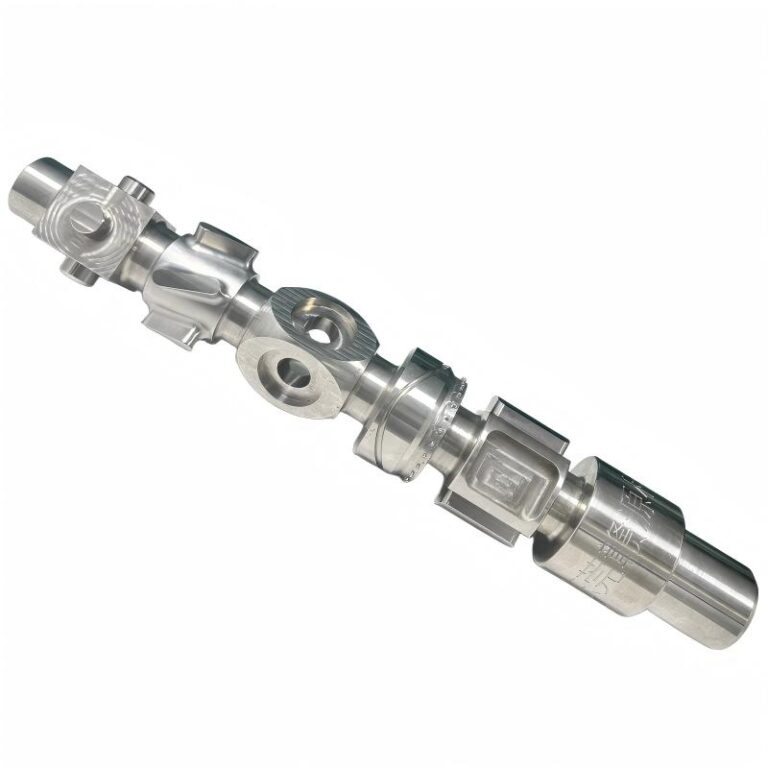
Transmission shaft Trustworthy 5-axis linkage custom-made precision shaft for industrial machinery
The inherent high strength, high toughness, poor thermal conductivity, and easy work hardening of stainless steel pose significant challenges to its precision turning and grinding. Traditional machining methods often fall short in terms of efficiency, consistency of precision, and the forming of complex structures. CNC machining, with its digital, high-rigidity, and multi-axis precision machining capabilities, provides the ultimate solution for manufacturing high-performance stainless steel drive shafts, endowing them with superior characteristics beyond those of traditional methods.
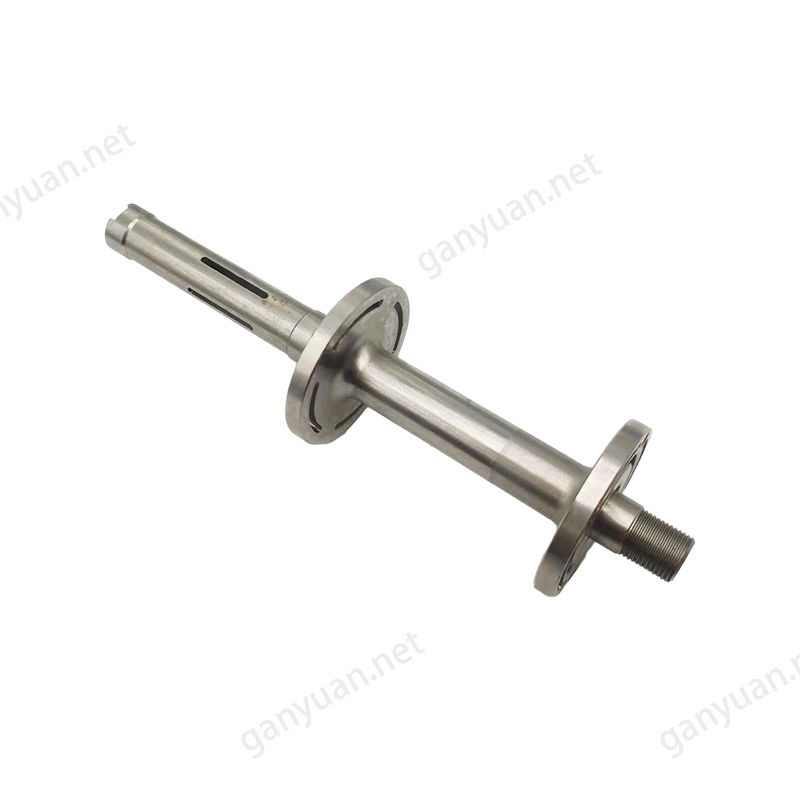
Transmission shaft Trustworthy 5-axis linkage custom-made precision shaft for industrial machinery
What are the advantages of CNC machining of stainless steel transmission shaft?
I. Achieving nanometer-level coaxiality and precision forming of complex geometric features across the entire shaft length
1) The core performance indicators of a drive shaft lie in the coaxiality, cylindricity, roundness, and perpendicularity and runout of each feature end face between its various shaft segments. Traditional sequential machining is prone to cumulative errors.
2) Single clamping, multi-process completion: Modern CNC multi-axis turning and milling centers or precision CNC lathes can complete most or even all of the processes from blank to finished product in a single clamping. This includes rough and finish turning of outer diameters, end faces, and conical surfaces; milling of keyways, flat sections, or irregular contours; and drilling and tapping.
This process philosophy fundamentally eliminates the accumulation of errors caused by multiple clamping and datum conversions, allowing coaxiality across the entire shaft length to be easily and stably controlled within 0.005 mm, and the roundness of critical bearing sections to the micrometer level.
3) Integration of complex contours and functional structures: For drive shafts integrating non-circular flanges, eccentric cams, irregular weight-reducing grooves, or special threads, CNC multi-axis linkage milling can integrally machine them with the shaft body, avoiding the risks of stress concentration, dynamic balance deterioration, and strength reduction caused by subsequent welding or assembly, significantly improving structural integrity and reliability.
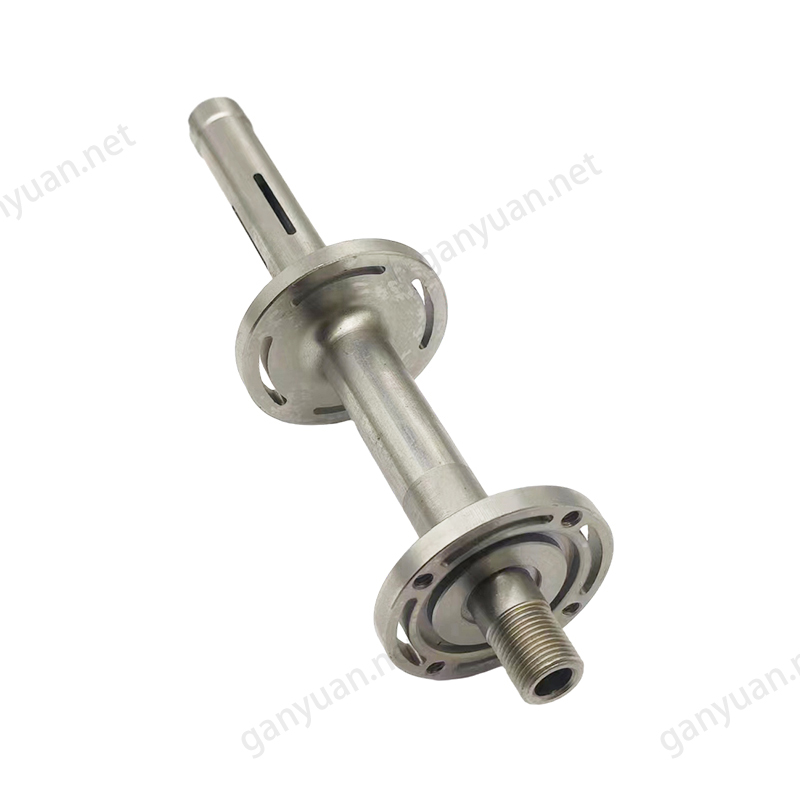
II. CNC Machining Technology for Stainless Steel Machining Challenges, Ensuring Internal Quality and Dimensional Stability
1) During the cutting process, especially in the finishing stage, stainless steel is prone to work-hardened layers and harmful residual tensile stresses due to cutting heat and plastic deformation, becoming a source of fatigue failure.
2) Optimized cutting strategy, controlling hardening and stress: CNC machining, through digital programming, employs large depths of cut and low speeds for roughing to efficiently remove excess material; finishing utilizes sharp, coated tools, high speeds, low feed rates, and precise high-pressure coolant spraying. This effectively suppresses heat accumulation, minimizes the depth of work-hardened layers, and induces beneficial residual compressive stress on the surface, thus significantly improving the shaft's resistance to bending and torsional fatigue life.
3) Online quality control: Advanced CNC systems integrate online measurement probes to monitor critical dimensions in real time during or between machining processes. Based on the measurement data, the system automatically compensates for toolpath deviations and corrects minor dimensional variations caused by cutting forces or thermal deformation, ensuring the dimensional stability of the finished product.
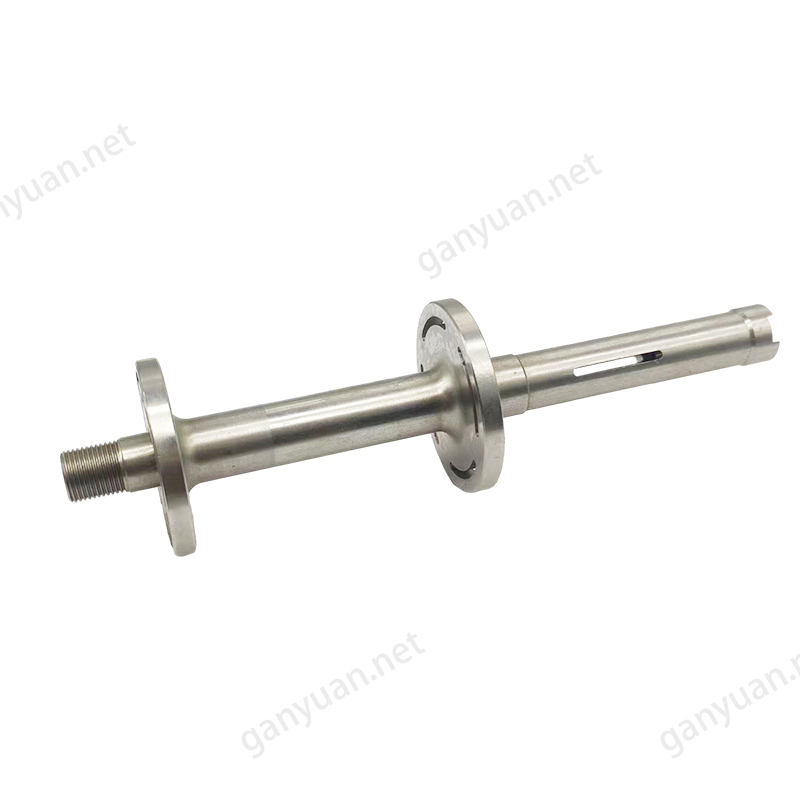
III. Creating superior functional surfaces to meet stringent service requirements
1) The surface quality of the mating surfaces of the drive shaft with bearings, oil seals, and couplings directly determines their operational smoothness, service life, and sealing effect.
2) Direct Achievement of High-Precision, Low-Roughness Surfaces: For bearing positions requiring interference fits, CNC precision grinding or ultra-precision turning can directly achieve extremely low surface roughness (Ra below 0.2μm) and precise dimensions, ensuring a tight and long-term stable fit.
3) Functional Textures and Strengthened Substrates: For sealing sections or sliding surfaces requiring special frictional properties, oil-retaining micro-textures can be machined using specific toolpaths. Simultaneously, the high-quality, clean surfaces produced by CNC machining serve as ideal substrates for subsequent surface strengthening and functionalization treatments, imparting ultra-high hardness, extremely low coefficients of friction, or excellent corrosion resistance.
Conclusion: The deep integration of CNC machining technology and high-performance stainless steel elevates the drive shaft, a fundamental mechanical component, into a "pillar" ensuring the efficient, reliable, and long-life operation of modern precision equipment.
Through one-piece molding with ultimate geometric precision, intelligent material and stress control, excellent shaping of functional surfaces, and digital flexible production management, stainless steel drive shafts can transmit power precisely in the most demanding working conditions, such as high speed, heavy load, corrosion, and cleanliness, with a silent and tough demeanor.
Company Profile
We are a manufacturer integrating industry and trade. We have more than 20 years of experience in production technology. We are located in Dongguan City, Guangdong Province, China. We have advanced high-end professional production and processing technology, and are committed to innovative R&D and production. After years of market tempering and exploration, it has high-quality technical management personnel, experienced designers, R&D personnel and a perfect company management system cnc precision.
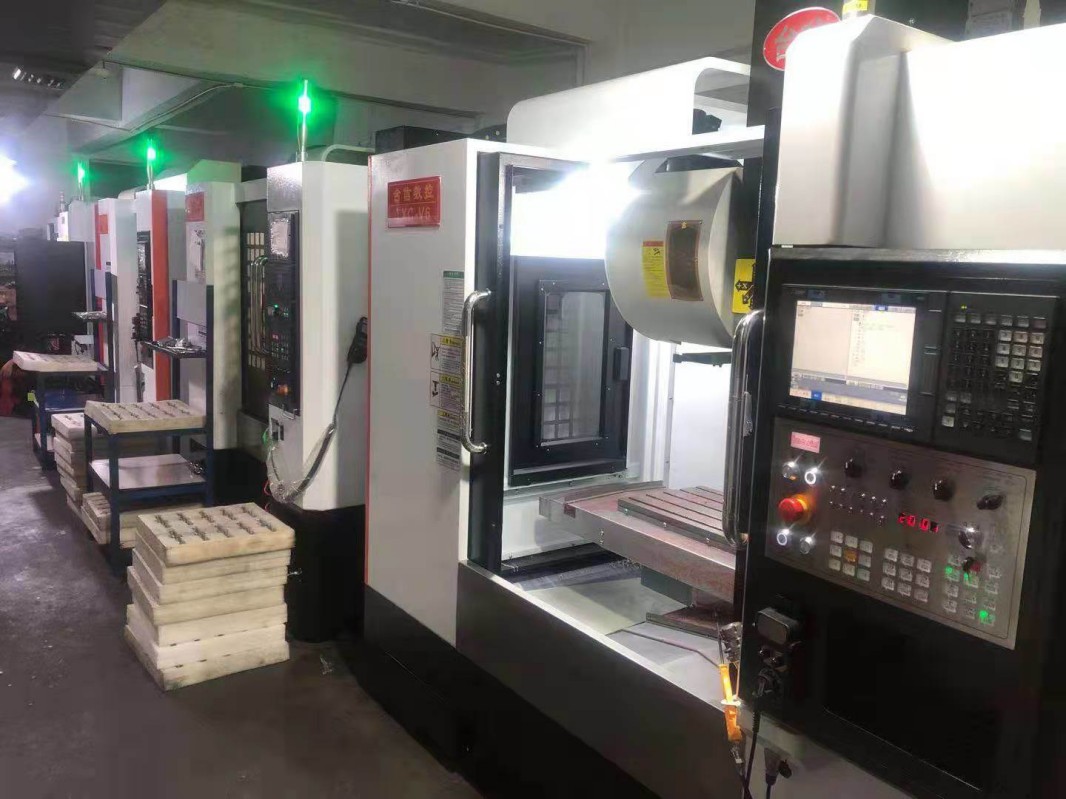
5-axis CNC workshop
Our factory has a plant area of about 2,000 square meters and masters core processing technologies. It has high-end precision production equipment cnc precision: CNC lathes, 5-axis CNC, 4-axis CNC, stamping equipment, die-casting equipment, etc. 2.5-dimensional detection equipment
two-dimensional testing

cnc precision surface treatment
For surface treatment, our suppliers have been working with us for many years. They have rich experience and are familiar with all the quality requirements of each other. The quality is stable and more guaranteed. Such as: heat treatment, spray painting, powder coating, blackening, silver/gold plating, electrolytic polishing, nitriding, phosphating, nickel/zinc/chromium/TiCN plating, anodizing, polishing, passivation, sandblasting, galvanizing, heat treatment , hardening, laser marking, etc. according to customer requirements. Aluminum alloy surface oxidation
Product Packaging
Packaging Details
- Commercial packaging: 1pc/plastic bag + color box +carton + pallet;
- Industrial packaging: (1). plastic tube + carton + pallet; (2). plastic bag + kraft paper + carton + pallet;
- According to the requirement of customer.